What is Robotics & Automation?
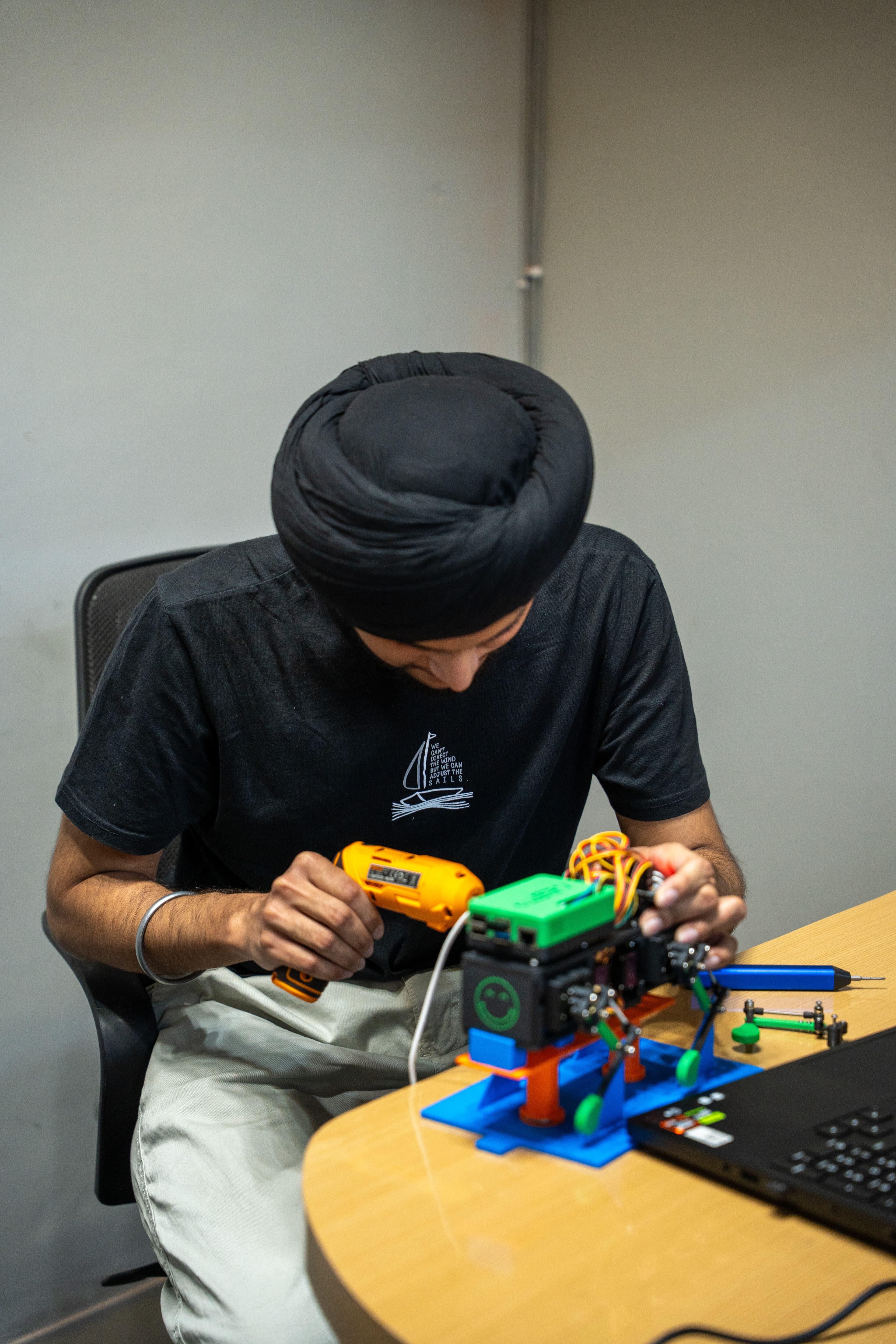
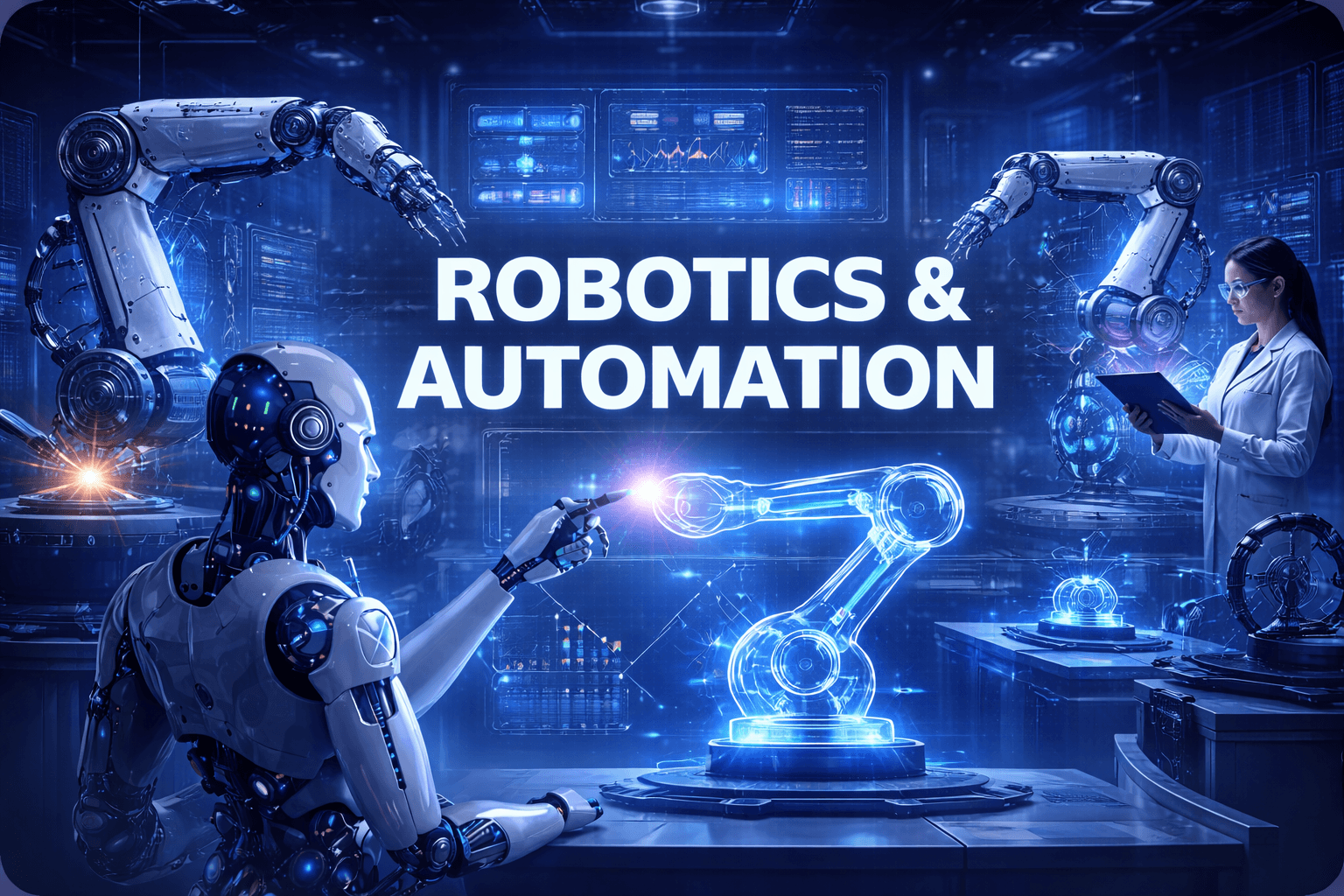
Robotics & Automation is the systematic application of mechanical engineering, computer science, and artificial intelligence to create intelligent machines that can interact with the physical world.
It encompasses robot design, control systems, computer vision, and machine learning techniques that enable autonomous systems to perceive, reason, and act in complex environments from manufacturing to healthcare.
Curriculum
Curriculum Highlights
Programme &
Curriculum
Semester 1
- Professional Development & Innovation Mindset I
- Technical & Persuasive Communication Studio I
- Sustainable Systems & Environmental Intelligence
- Program Core
- Foundational Physics for Engineering Systems I
- Engineering Mathematics I: Calculus & Linear Systems
- Applied Physics & Experimental Design Lab I
- Innovation Catalyst I: Exploring Grand Challenges & Lab Immersion
- Foundation of AI & Data Engineering
- AI and Data Engineering Studio 1
- Principles of Cyber Defence & Digital Trust
- Cyber Defence Operation Lab I
Semester 2
- Professional Development & Innovation Mindset II
- Advanced Technical Communication & Collaborative Presentation Studio
- Indian Heritage & Culture
- Engineering Mathematics II: Differential Equations & Probabilistic Models
- Foundational Physics for Engineering Systems II: Electromagnetism & Modern Physics
- Applied Physics & Experimental Design Lab II
- Innovation Catalyst II: Foundational Skills & Lab Project Prototyping
- Cloud Systems & Infrastructure Essentials
- AI & ML Foundations: Statistics & Search Algorithms
- Python for AI Programming Studio
Career Impact
Applications of Robotics & Automation

Robotics Engineer
Designing and developing autonomous robots for manufacturing, healthcare, and service industries.

Automation Specialist
Creating intelligent automation systems for industrial processes and smart factories.

Computer Vision Engineer
Building perception systems that enable robots to see and understand their environment.

Control Systems Engineer
Developing advanced control algorithms for precise robot movement and manipulation.
Fees Structure
| Specialization Architecture | Duration | Annual Investment | Entry Threshold |
|---|---|---|---|
Major Specialization Robotics & | 04 Years | ₹2.0L (Per Annum) | Eligibility Criteria 10+2 with Physics & Math (Compulsory) + Chem/CS/Bio. 70% Aggregrate Minimum |
Emerging Trends
The Horizon of Robotics
Autonomous Systems
Humanoid Robots
Swarm Intelligence
Soft Robotics
Brain- Machine
Institutional Edge
An Overview
10,000+
Academic Minds
125+
Industry Alliances
40K+
Global Alumni Network
340+
Strategic Placements
42 LPA
Peak Opportunity
4.1 LPA
Mean Trajectory
45 Acre
Smart Infrastructure
10,000
Innovation Lab (Sq Ft)
AESTR @Advantages
Train for roles powering the next generation of banking, robotics, healthcare, and more—with real-world impact and future security.
Student awarded as First Google Ambassador.
Recipient of I.GAUGE E- LEAD CERTIFICATE
Benefit from credit transfer- degree programmes
Future Scope of
Robotics & Automation
Next-Gen Automation
The robotics revolution represents the biggest transformation in industrial automation since the assembly line. As every sector adopts intelligent machines, the demand for robotics engineers is projected to grow by 35% YoY.
Specializing in Robotics at AESTR equips you with cutting-edge skills in autonomous systems, computer vision, and control engineering that power the next generation of intelligent machines.

Innovation Labs
The 2030 Roadmap

Apple Ecosystem
Dive deep into Apple's ecosystem - from iOS development to machine learning integration with Core ML and Swift.

NVIDIA Pipeline
Master GPU computing and CUDA programming for high-performance AI model training and deployment.

RISC-V Lab
Explore open-source processor architecture and design custom silicon for specialized AI workloads.

Embodied Brain Lab
Bridge the gap between digital intelligence and physical robotics with embodied AI systems.
Quality Assurance
Your Pathway to Success
Core Competency Mapping
Individual skill auditing to align academic path with personal strengths.
Project Incubation
Venture-grade project development under mentorship of Shodh AI researchers.
Professional Readiness
Intensive training in technical communication and global workplace dynamics.